
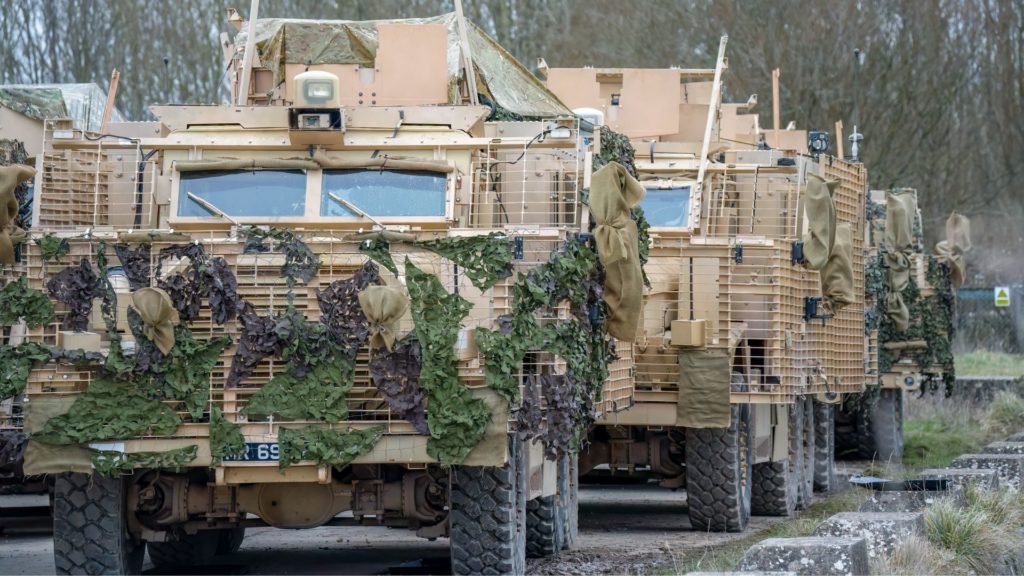
As geopolitical instability continues to reshape global priorities, defence manufacturing has moved sharply up the industrial agenda. Governments across Europe—including the UK—are increasing spending commitments, accelerating procurement programmes, and, crucially, re-evaluating the resilience of their supply chains.
At the heart of this shift lies a renewed focus on sovereign manufacturing capability—ensuring that critical components can be produced reliably, securely, and within national borders. For precision engineering specialists like HT Brigham Pressings, this is creating a clear and immediate opportunity.
For decades, defence supply chains—like many others—were optimised for cost and efficiency, often relying on complex international networks. But recent disruptions, from the COVID-19 pandemic to ongoing geopolitical tensions, have exposed the vulnerabilities of that model.
Today, the priority has changed.
“Defence is demands resilient capability in the supply chain,” says Doug Allen, CEO of HT Brigham Pressings. “If you can’t guarantee continuity of supply, quality, and traceability, then you introduce risk at every level of a programme.”
This shift is driving OEMs and Tier 1 contractors to reassess their supplier base, with a growing preference for UK-based partners who can offer both technical capability and operational reliability.
While often overlooked in favour of more visible systems and assemblies, metal pressings are fundamental to defence platforms—from armoured vehicles and aerospace structures to communications systems and electronic housings.
These components must meet exacting standards:
– Tight tolerances and repeatability
– High-strength and specialist materials
– Full traceability and documentation
– Consistent performance in extreme environments
“If a bracket, housing or structural element fails, it can compromise the integrity of the entire system. That’s why quality and consistency are crucial”explains Allen.
HT Brigham’s investment in a diverse press fleet—ranging from 60 to 400 tonnes, including high-speed progression and transfer presses—enables the business to support both volume production and complex, lower-volume defence requirements.
In defence manufacturing, compliance is a fundamental requirement. Standards such as AS9100, while rooted in aerospace, are increasingly seen as a benchmark for quality systems across high-spec industries.
For suppliers, this means robust processes, rigorous inspection, and complete traceability throughout the production lifecycle.
“Customers need absolute confidence in what they’re buying,” says Allen. “That goes beyond the part itself—it’s about knowing where the material came from, how it was processed, and that every stage has been controlled and verified.”
“We have a great track record for taking work out of suppliers who are failing or wobbling, getting tools working and getting production back up and running again.” he explains
This level of assurance is particularly important as defence programmes become more complex and interconnected, with components often integrated across multiple platforms and systems.
Beyond capability and compliance, agility is emerging as a key differentiator—particularly for mid-sized manufacturers.
Unlike larger, volume-driven operations, businesses like HT Brigham can respond quickly to changing requirements, whether that’s ramping up production, adapting tooling, or supporting rapid prototyping.
“In defence, requirements can evolve quickly,” Allen notes. “You need suppliers who can adapt without compromising quality. That’s where agile, engineering-led manufacturers come into their own.”
This flexibility is especially valuable in the context of urgent operational requirements and evolving defence technologies, where speed and responsiveness can be as important as cost.
s
The broader implication of this shift is a renewed emphasis on strengthening the UK’s industrial base. By investing in domestic manufacturing capability, defence primes and government bodies are not only reducing risk but also supporting long-term economic resilience.
For HT Brigham Pressings, the alignment is clear.
“The conversation has moved on from cost alone,” Allen concludes. “It’s now about capability, resilience and trust. UK manufacturers have a real opportunity to step up and play a bigger role in defence—and that’s exactly what we’re focused on doing.”