
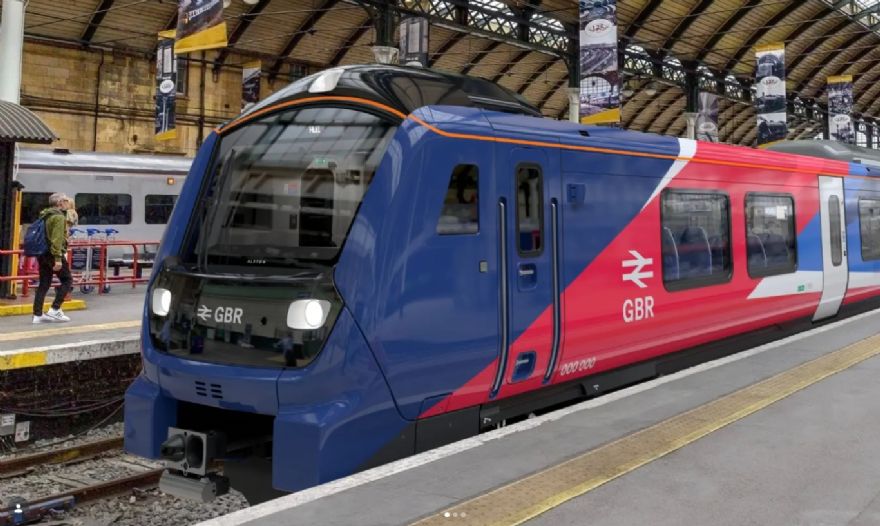
A £1 billion order for a new generation of battery-electric trains is opening another sizeable market for UK manufacturers capable of producing precision metal components in volume, according to Birmingham-based HT Brigham Pressings. The programme will see 29 Alstom Adessia Stream trains built at Litchurch Lane in Derby for TransPennine Express, supporting an estimated 6,000 jobs across the wider UK supply chain.
For HT Brigham Pressings, the significance lies in what happens beneath the headline train order.
Modern rolling stock requires a substantial range of pressed, stamped and formed metal components, brackets, retainers, covers, housings and assemblies. Many share manufacturing characteristics familiar to Brigham through decades of supplying demanding automotive and advanced engineering programmes: repeatable production, controlled tooling, tight tolerances, traceability and dependable delivery over long programme lives.
CEO Doug Allen believes the investment should encourage UK manufacturers to look closely at where their existing capabilities can transfer into rail.
“There is a real supply-chain opportunity behind this announcement,” said Allen. “When 29 trains are being manufactured in Britain, the requirement extends deep into the component supply chain. That plays directly into the strengths of UK companies with established presswork, tooling and assembly capability.
“At Brigham, we already have the presses, toolmaking knowledge, quality systems and high-volume manufacturing experience required for demanding engineered components. Rail is therefore a market where our existing capability has considerable relevance.”
Brigham operates a 60 to 400-tonne press fleet, spanning high-speed progression, transfer and single-operation presswork. Its three recently serviced Bruderer BSTA 60-tonne progression presses can operate at up to 800 strokes per minute, providing capacity for high-volume precision components manufactured from stainless steel, mild steel, aluminium and brass.
Larger progression and transfer presses extend that capability into more substantial and complex formed parts.
The company’s integrated toolroom is equally important to the opportunity. Brigham can take a component from tooling development and prototype manufacture into production pressings and assembled parts, giving customers a UK manufacturing route covering the different stages of industrialisation.
Its experience supplying automotive and aerospace programmes brings established quality disciplines too, backed by IATF 16949, AS9100 and ISO 9001 certification.
Allen sees rail as part of a wider opportunity emerging from investment in electrified transport.
“The interesting question for us is where a component currently sourced elsewhere could be tooled and manufactured competitively here in Birmingham,” he said.
“We have spent decades developing expertise in precision pressings and high-volume production. Programmes such as this create an opportunity to apply that expertise to another important UK industry, working with customers from the drawing and tooling stage through to repeat production.”
With the first trains expected to enter service from winter 2034, the timescale also creates scope for suppliers to position themselves well ahead of production.
For Brigham, the £1 billion announcement represents more than encouraging news for Derby. It identifies a long-term addressable market for British presswork, tooling, stampings and assemblies — and one that closely matches capabilities already operating on its Birmingham factory floor.