
The global aerospace sector entered 2026 with renewed confidence, after aircraft deliveries in 2025 reached their highest level in seven years. New figures from ADS show deliveries rising 25% year on year to 1,411 aircraft, alongside a 50% surge in new orders and a record backlog equivalent to more than 13 years of work for the UK supply chain.
For manufacturers across the aerospace ecosystem, the numbers underline both opportunity and expectation. Rising build rates, particularly in single-aisle and wide-body programmes, are translating into sustained demand for high-quality, repeatable components — and placing fresh emphasis on the resilience and maturity of Tier 2 and Tier 3 suppliers.
At Midlands-based presswork specialist HT Brigham, the figures reinforce a strategic direction already under way.
“The delivery data confirms what we’re seeing on the ground,” says Doug Allen, CEO of HT Brigham. “Aerospace production is ramping up, and the backlog means this is a sustained cycle. For suppliers, that puts the spotlight firmly on engineering capability, process control and absolute confidence in quality.”
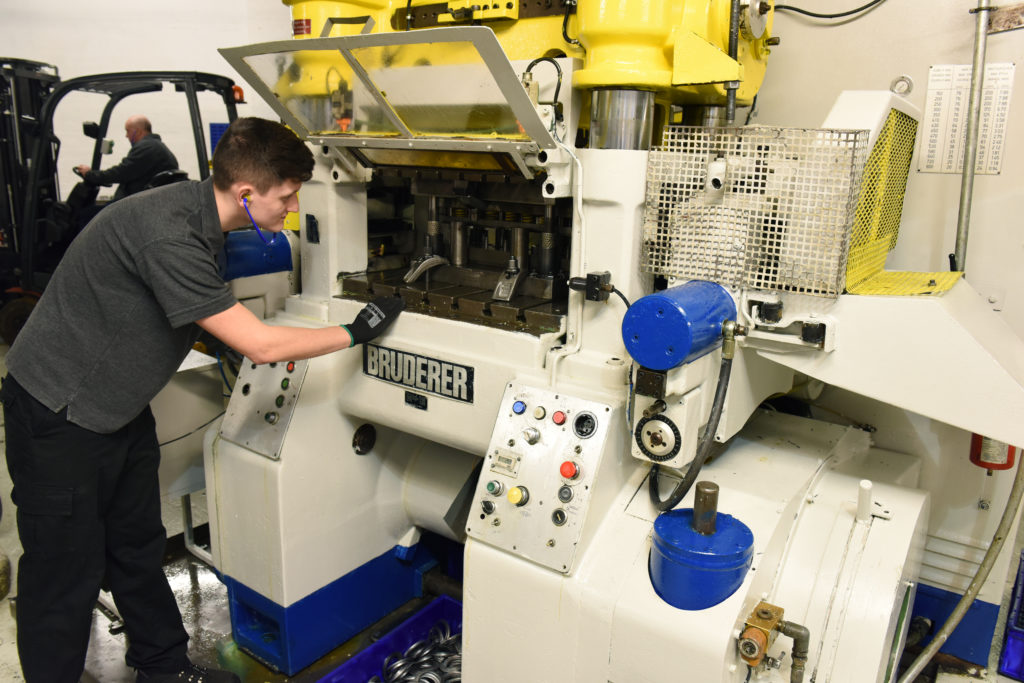
Founded in 1947, HT Brigham has built its reputation on complex pressings, precision presswork and high-volume metal stamping, supported by in-house tool making and deep engineering expertise. While historically strong in automotive and industrial markets, the company has been deliberately positioning itself to support aerospace programmes that demand longer lifecycles, tighter tolerances and uncompromising traceability.
Central to that shift is its AS9100 accreditation — widely regarded as the benchmark quality management standard for aerospace manufacturing.
“AS9100 isn’t just a badge; it’s a mindset,” Allen explains. “It governs how you design tools, how you control processes, how you manage change and how you protect product integrity over years, not months. As production rates increase, primes and Tier 1s need suppliers who can scale without introducing risk. Accreditation is one part of that, but experience and discipline matter just as much.”
ADS data shows the aircraft backlog now standing at more than 16,000 aircraft, driven in part by a 24% rise in wide-body orders. That long-term visibility is prompting OEMs to look hard at supply chain capacity and robustness — lessons sharpened by the disruption of recent years.
“The industry has learned some tough lessons about over-stretching fragile supply chains,” says Allen. “What we’re seeing now is a preference for suppliers with proven engineering depth, strong tool making capability and the ability to deliver consistent pressings at volume, year after year. That plays to our strengths.”
HT Brigham’s integrated approach — combining metal pressing, stamping and tool manufacture under one roof — allows greater control over quality and lead times, a factor increasingly valued as aerospace manufacturers push to exceed planned delivery scenarios.
Looking ahead, Allen believes the sector’s challenge is less about demand and more about execution.
“The opportunity is huge — £269bn of potential value to the UK at current production rates is not to be underestimated,” he says. “Success depends on investing in skills, equipment and systems now. Aerospace is unforgiving. If you get it right, you become a long-term partner. If you get it wrong, you’re quickly exposed.”
As the aerospace skies “begin to clear”, to borrow ADS’s phrase, suppliers like HT Brigham are positioning themselves to ride the upturn.