
As Britain works to secure the future of its steel industry, most attention has been on protecting domestic steelmaking. But for companies further along the supply chain, the real challenge is making sure policy supports the businesses that turn steel into valuable products, export sales, and skilled jobs.
For Coleshill-based HT Brigham Pressings, one of the UK’s longest-established specialists in precision metal pressings and stampings, this debate shows why it’s important to see manufacturing as a connected ecosystem, not just a collection of separate sectors.
New steel import quotas and tariffs have led manufacturers across the UK to look again at their supply chains, buying strategies, and long-term sourcing. Supporting UK steel production makes sense, but businesses that need specialist grades also need to know they’ll still have access to the right materials to stay competitive globally.
HT Brigham Pressings supplies precision pressed components to customers operating in demanding sectors where material specification, consistency and performance are critical. Many of these components are produced using progressive tooling, transfer tooling and high-volume presswork techniques that depend on steels with tightly controlled mechanical properties and surface characteristics.
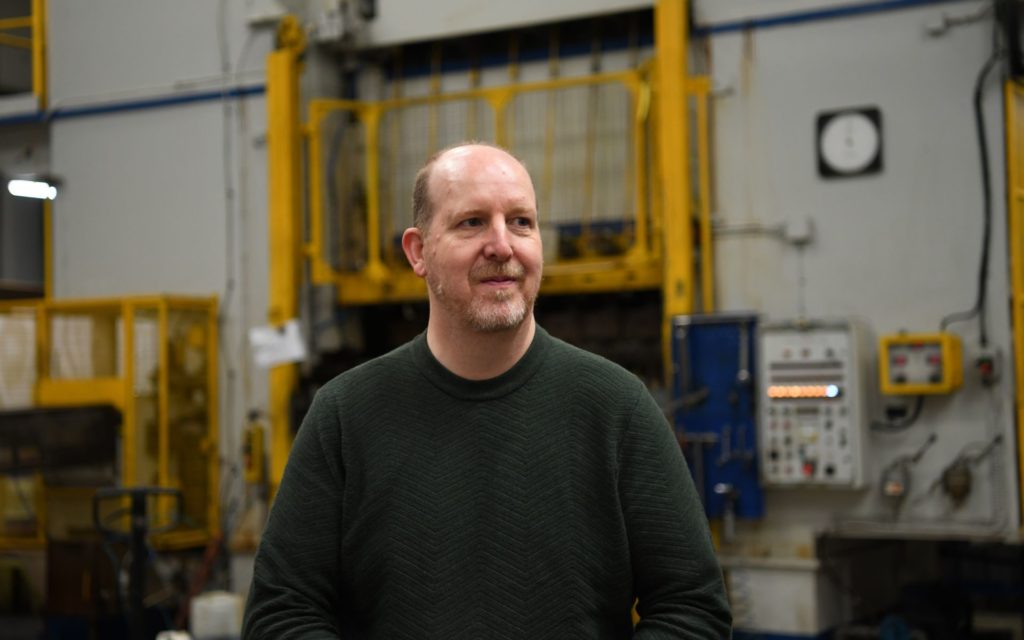
Doug Allen, CEO of HT Brigham Pressings, believes the discussion should focus on strengthening the competitiveness of the entire manufacturing value chain.
“Everyone wants a strong UK steel industry,” Allen said. “Steelmakers, stockholders, tooling specialists, presswork companies, and manufacturers all rely on each other. The question isn’t whether we support British industry—we do—but how we make policies that strengthen every part of that ecosystem.”
He added: “Manufacturers like us compete internationally. Our customers compare us with suppliers from Europe, North America, and Asia, so having access to the right materials at competitive prices is key to staying attractive as a manufacturer.”
For companies making precision pressings and metal stampings, steel isn’t just a basic commodity. Each job needs different grades, coatings, thicknesses, and performance features, most of which are decided during design and tooling and stay the same throughout production.
Changing material specifications can require tooling modifications, additional validation, customer approvals and production testing, making consistency of supply just as important as price.
Allen believes this underlines why manufacturing policy should be developed with close engagement across the entire supply chain.
“One of Britain’s strengths has always been turning raw materials into high-value products,” he said. “Whether it’s car parts, electrical systems, defence equipment, or industrial assemblies, value comes from thousands of specialist manufacturers adding their know-how at every stage.”
Instead of treating upstream and downstream manufacturing as separate interests, he sees a chance to build a more joined-up industrial strategy—one that makes the system stronger and encourages investment all the way through production.
“The businesses buying steel are also the ones investing in new presses, automation, tooling, apprenticeships, and engineering skills,” Allen said. “When the whole supply chain is competitive, everyone wins—from steel producers to exporters and the wider UK economy.”
As market conditions keep changing, HT Brigham Pressings stays focused on what it can control: investing in modern presses, building tooling expertise, strengthening customer partnerships, and delivering quality metal pressings that help customers compete worldwide.
“Manufacturing always adapts to change,” Allen said. “The businesses that do well are the ones that stay innovative, work together, and focus on creating value. If policy can support those qualities across manufacturing, Britain will be much stronger in the long run.”