
Debate over the Government’s steel strategy has focused attention on a major challenge for British manufacturing: securing reliable, cost-effective raw materials while keeping UK production competitive.
Industry groups warn that reduced import quotas and higher tariffs could disrupt manufacturers. As a result, businesses in the automotive, aerospace, and defence sectors are now placing greater value on resilient, collaborative supply chains—not just steel prices.
For Birmingham-based precision pressings specialist HT Brigham, the conversation extends far beyond commodity pricing. Brigham Pressings believes that long-term engineering partnerships, early project involvement and effective material planning are becoming just as important as the steel that ultimately enters the press.
Industry organisations including the Confederation of British Metalforming have warned that restrictions on imported steel could inadvertently weaken the manufacturers responsible for transforming raw material into finished components. Concerns have centred around limited domestic availability of certain steel grades, increasing lead times and uncertainty around pricing, all of which make it more difficult for manufacturers to confidently quote, schedule production and invest for future growth.
The Government is now understood to be considering exemptions for steel products that cannot be sourced domestically, recognising the concerns raised by manufacturers across engineering and advanced manufacturing.
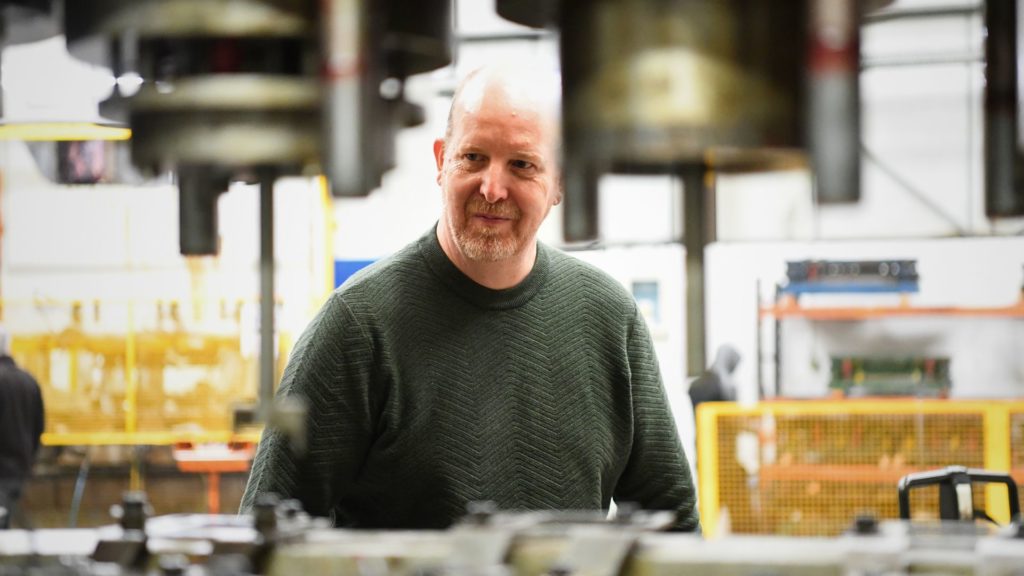
Doug Allen, CEO of HT Brigham, believes the discussion highlights the importance of understanding how the wider manufacturing supply chain operates.
“Everyone wants to see a strong UK steel industry because it underpins British manufacturing. But it is equally important that the thousands of companies transforming that steel into high-value engineered products remain competitive. You cannot strengthen one part of the supply chain if it unintentionally weakens another.”
HT Brigham manufactures complex precision metal pressings, fabricated assemblies and engineered components for customers operating in some of the world’s most demanding industries. Working across automotive, aerospace, defence and industrial engineering, the business combines decades of presswork expertise with in-house tooling knowledge and project management capability to deliver production programmes from prototype through to full-volume manufacture.
Allen says uncertainty around material availability reinforces the value of involving manufacturing partners much earlier in product development.
“Good engineering starts long before the first press stroke. When we’re involved early, we can advise on material selection, tooling strategy, progression press design, production planning and manufacturing efficiency. Those conversations become even more valuable when customers are trying to manage supply risks or changing market conditions.”
Rather than simply supplying precision pressings, HT Brigham increasingly works alongside customers to optimise designs for manufacture, reduce waste, improve material utilisation and build greater resilience into production programmes.
The company’s investment in modern presswork technology, tooling expertise and fabrication capabilities allows it to respond quickly when engineering changes or material substitutions become necessary, helping customers avoid unnecessary delays while maintaining the demanding quality standards expected across regulated industries.
Allen added: “Manufacturing has always been about solving problems. Whether that’s redesigning tooling, managing alternative material routes or helping customers plan further ahead, collaboration is what keeps production moving.
“The businesses that will succeed over the coming years won’t simply be those with the lowest material costs. They’ll be those with trusted manufacturing partners who can provide technical expertise, flexible production capability and confidence that programmes will be delivered despite external pressures.
“British manufacturing has repeatedly shown its resilience. With sensible policy, open dialogue and stronger collaboration across the supply chain, there’s every opportunity to protect both UK steelmaking and the world-class manufacturers that turn those materials into products that compete on the global stage.”