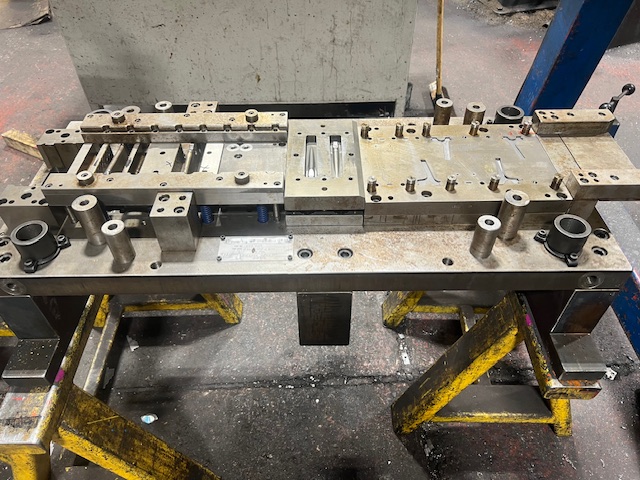
When manufacturers look for ways to reduce production costs, the conversation often centres on automation, material prices or supply chain efficiencies. Yet some of the greatest opportunities to improve quality, reduce waste and shorten lead times occur long before the first component reaches the press.
For HT Brigham Pressings, involving an experienced precision pressings and tooling specialist during the early stages of product development can transform both the commercial and technical success of a project.
From simplifying complex geometries to selecting the most appropriate manufacturing process, early engineering collaboration enables components to be designed for efficient, repeatable production rather than simply manufactured as originally conceived.
It is an approach that has helped the Coleshill-based manufacturer support customers across demanding sectors where performance, consistency and long-term value are equally important.
Whether producing precision metal pressings, deep drawn components, progressive pressings, transfer presswork or bespoke sheet metal stampings, many of the most significant improvements are made before tooling is even commissioned.
Chief Executive Doug Allen believes manufacturers often underestimate just how much influence early supplier involvement can have.
“Customers naturally focus on the finished component because that’s what ultimately goes into their product,” he said.
“But some of the biggest savings come from asking the right engineering questions before production begins. A small design modification can reduce tooling complexity, eliminate secondary operations, improve material utilisation or significantly increase production speed. Those decisions can deliver value throughout the entire life of a programme.”
Design for Manufacture (DfM) has become an increasingly important discipline as manufacturers seek greater efficiency without compromising quality.
Rather than treating tooling as the final stage before production, HT Brigham Pressings works closely with customers to understand the function of a component, identify manufacturing opportunities and develop solutions that optimise both performance and cost.
That collaborative approach can include reviewing material selection, tolerances, bend radii, feature locations, forming sequences and production methods to ensure components are ideally suited to high-volume manufacture.
In many cases, seemingly minor design adjustments allow multiple manufacturing operations to be combined into a single tool, reducing handling, improving repeatability and shortening production cycles.
For customers operating in sectors such as aerospace, automotive, electrical engineering and industrial manufacturing, these improvements deliver benefits that extend well beyond individual component costs.
Repeatable quality, shorter lead times, improved process capability and enhanced supply chain resilience all contribute towards lower total manufacturing costs over the lifetime of a product.
Supporting this approach is HT Brigham Pressings’ investment in modern manufacturing systems and internationally recognised quality processes, including AS9100 accreditation for aerospace manufacturing.
The business combines decades of expertise in tool design, progressive tooling, transfer tooling, high-volume presswork, metal pressings and precision engineering, enabling customers to move confidently from concept through to full production.
Allen believes successful manufacturing partnerships begin with shared engineering knowledge rather than simply competitive pricing.
“The best outcomes come when customers involve us as early as possible,” he said.
“Our engineers aren’t simply here to manufacture drawings. We’re here to help improve them. By combining practical presswork expertise with tooling knowledge and production experience, we can often identify opportunities that make a product easier to manufacture, more consistent to produce and more competitive throughout its lifecycle.”
As manufacturers continue to seek greater productivity and resilience, early collaboration between designers and manufacturing specialists is becoming less of a competitive advantage and more of a commercial necessity.
For HT Brigham Pressings, it reinforces a simple principle: the smartest manufacturing decisions are often made before production begins.